Blog
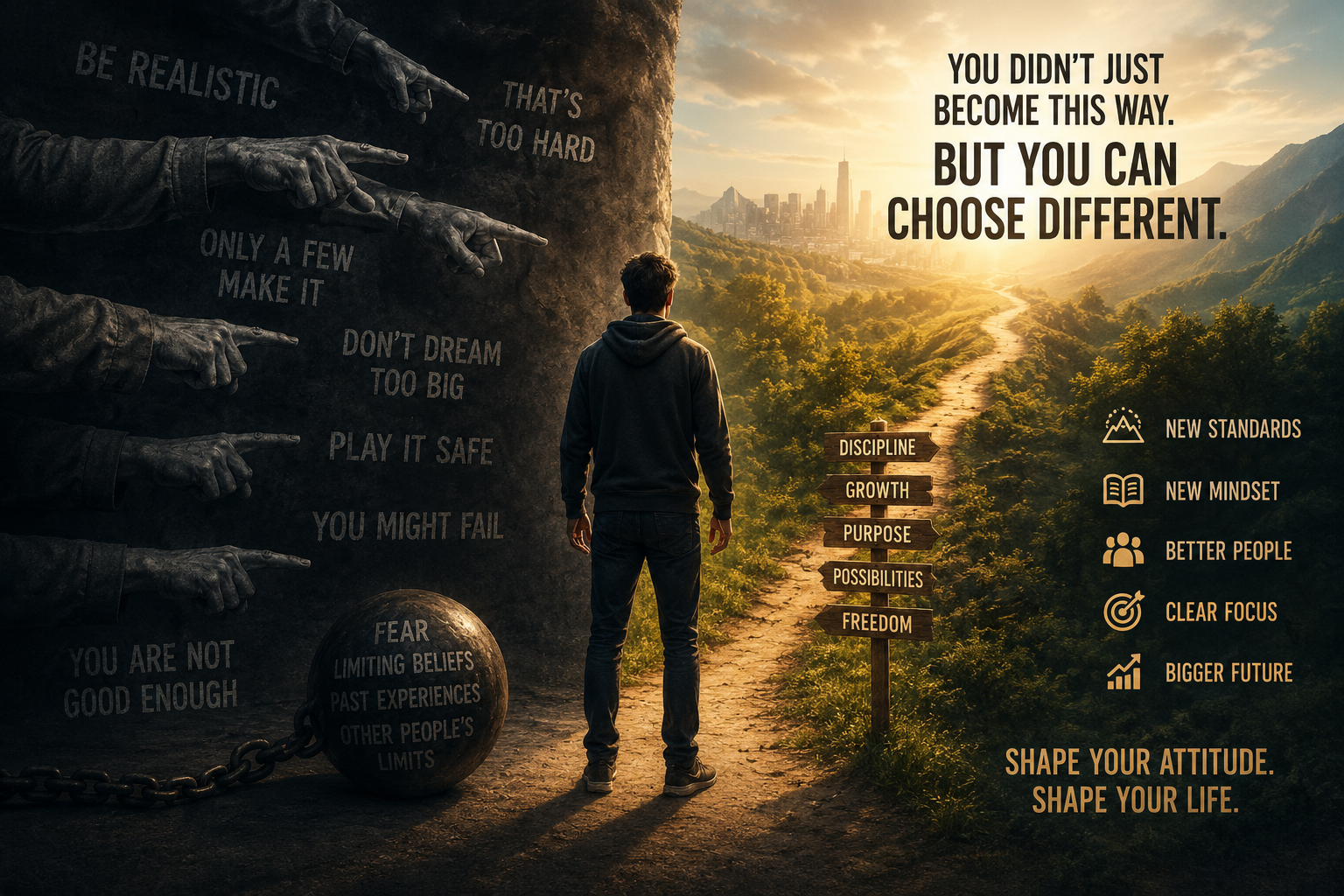
Your attitude was shaped by people, experiences, environments, and repeated messages. But once you understand what shaped you, you can begin to shape yourself.
You Didn’t Just Become This Way
But You Don’t Have to Stay This Way
You did not become who you are by accident.
The way you think, react, dream, work, hesitate, believe, and see yourself was shaped over time. By people. By experiences. By words. By praise. By criticism. By disappointment. By your environment.
Long before you consciously asked yourself who you wanted to become, life had already started forming an image inside you.
Before you shape yourself, you are shaped by others.
And for many people, that shaping starts earlier than they realize.
As a child, you do not naturally think in limitations. When a child says, “I want to be an astronaut,” “I want to be rich,” “I want to build something big,” or “I want to become famous,” the child does not immediately think about all the reasons why it might not work.
To the child, it is possible.
Not because the child already has the full plan. Not because the child understands every obstacle. But because the child has not yet learned to shrink himself down.
A child sees possibility first.
Adults often see limitation first.
And many adults do not limit children because they are cruel. Often, they do it because they want to protect them. They do not want them to be disappointed. They do not want them to fail. They do not want them to suffer later because they expected too much from life.
So they say things like:
“Be realistic.”
“That’s hard.”
“Only a few people make it.”
“Choose something safe.”
“Don’t dream too big.”
Most of the time, there is no bad intention behind it. There may even be love behind it. Concern. Experience. A protective instinct.
But this is where the problem begins.
Many adults do not only pass on wisdom. They also pass on their own limits.
They pass on what did not work for them.
They pass on what they fear.
They pass on what someone once talked them out of.
They pass on beliefs they never questioned themselves.
And suddenly, protection becomes limitation.
Experience becomes a cage.
Love becomes a quiet sentence in a child’s mind that still has power years later:
“Maybe I shouldn’t think too big.”
Not Every Warning Was Truth
One of the most important realizations in personal growth is this:
Not every warning you heard was truth.
Sometimes it was only another person’s fear.
That does not mean your parents were bad. It does not mean every teacher was wrong. It does not mean every piece of advice should be rejected.
But it does mean you have to understand how early your attitude was shaped.
A child does not come into this world thinking, “I am not good enough.”
A child does not come into this world thinking, “I am not allowed to fail.”
A child does not come into this world thinking, “I have to make myself small so I can be accepted.”
Those beliefs are created.
Through repetition.
Through reactions.
Through comparisons.
Through looks.
Through moments where a child feels, “Maybe I am too loud, too different, too slow, too dreamy, too much.”
And then the child adapts.
Not because he consciously decides, “I will become less myself now.”
But because he learns:
“If I adapt, I meet less resistance.”
Later, we often call that personality.
But sometimes it is not personality.
Sometimes it is only an old protection pattern.
Much of what you now call your personality may once have been nothing more than your way of adapting.
Your Environment Shapes Your Standards
This does not stop in childhood.
It continues in school.
In friendships.
In work.
In teams.
In companies.
Through colleagues.
Through leaders.
Through the people you spend time with every day.
You do not only learn information from your environment.
You adopt its pace.
You adopt its standards.
You adopt its excuses.
You adopt its energy.
You adopt its way of thinking.
If you spend enough time in an environment where little is demanded, little can start to feel normal.
If you spend enough time around people who always complain, complaining starts to feel normal.
If you spend enough time around people who laugh at big goals, you eventually become more careful with your own dreams.
If you spend enough time around people who accept excuses, excuses start to feel acceptable.
And then, after a while, you may begin to believe:
“This is just who I am.”
But often, that is not true.
Often, you have simply spent too much time in an environment that made your weaker version feel normal.
Sometimes You Need a New Standard to Discover a New Self
Many people say:
“I’m just not disciplined.”
“I’m just not ambitious.”
“I’m just not resilient.”
“I’m not the type of person who thinks big.”
“I’m someone who gives up quickly.”
But what if that is not your identity?
What if that is only the result of the standards you have been surrounded by?
Sometimes a new environment shows you a version of yourself you did not even know was there.
When you enter an environment where more is expected, more is worked for, more responsibility is taken, and stronger standards are normal, something inside you can wake up.
Not because that strength was not there before.
But because it was not demanded before.
You often only discover what you are truly capable of when you are placed under different standards.
That does not mean you should destroy yourself. Growth is not about burnout. Strength is not about working yourself into the ground.
But it does mean this:
Your environment matters more than you think.
The people around you are not neutral.
The content you consume is not neutral.
The conversations you repeat are not neutral.
The standards you accept are not neutral.
They are shaping you.
Every day.
The only question is: in which direction?
You Are Allowed to Choose Who Shapes You Now
At the beginning of your life, you cannot choose much.
You are born into a family.
Into a certain environment.
Into a certain system.
Into certain experiences.
Into certain voices.
You adopt beliefs, language, habits, values, fears, expectations, and inner images long before you fully understand what is happening.
But at some point, responsibility begins.
Not responsibility for everything that happened to you.
But responsibility for what you do with it now.
You can decide which voices you keep in your head.
You can decide which books you read.
Which audios you listen to.
Which conversations you have.
Which people you take seriously.
Which role models you follow.
Which standards you adopt.
Which environments you seek.
You cannot control everything.
But you can consciously direct far more than many people believe.
You are allowed to choose who shapes you from this point forward.
That is one of the most powerful shifts in personal development.
Because your attitude continues to be shaped every day.
By old fears or new clarity.
By people who keep you small or people who pull you forward.
By excuses or responsibility.
By limitation or growth.
By unconscious repetition or conscious decision.
You did not just become this way.
But you do not have to stay this way either.
Build a New Inner Voice
Maybe nobody told you often enough that you were capable.
Maybe your dreams were laughed at.
Maybe you were criticized more than you were encouraged.
Maybe you learned to adapt instead of unfold.
Maybe you learned to stay quiet, stay small, stay realistic, stay safe.
But that does not mean the old voice has to remain the strongest voice inside you.
You can begin today to build a new inner voice.
One that says:
“I can grow.”
“I can learn.”
“I can get better.”
“I am allowed to think bigger.”
“I am not bound to other people’s limitations.”
“I do not have to build my future on someone else’s fear.”
“I am allowed to become more than what my past taught me to expect.”
A strong self-image does not protect you from every setback.
But it changes how you interpret setbacks.
And that changes everything.
Because the same failure can either confirm your old limitation or train your new strength.
The same criticism can either make you shrink or make you clearer.
The same challenge can either prove that you are not enough or show you that you are capable of growing.
Your attitude decides what meaning you give to what happens.
And the meaning you give to what happens shapes who you become next.
The Moment You See It, You Can Change It
You are not here to condemn everyone who shaped you.
Many people only passed on what they knew.
Many acted from their own fear.
Many may even have wanted to protect you.
But protection is not always growth.
And experience is not always truth.
Sometimes experience is only proof of what someone else did not achieve, did not understand, or never dared to try.
That is why you have to learn to ask better questions:
What truly belongs to me?
What did I only adopt?
What attitude was modeled for me?
What standards did I accept?
What limits did I believe, even though I never tested them myself?
Who do I consciously want to become now?
That is where the shift begins.
As long as you live unconsciously, you are guided by old conditioning.
But the moment you begin to look consciously, freedom of choice appears.
You cannot change your past.
You cannot go back and hear different words.
You cannot undo every experience.
You cannot erase every sentence that shaped you.
But you can begin today to reshape yourself.
Through new thoughts.
Through new decisions.
Through new standards.
Through new people.
Through new books.
Through new environments.
Through new actions.
Not all at once.
Not perfectly.
Not without resistance.
But consciously.
Because the moment you realize you were shaped is the moment you can begin to shape yourself.
And if your attitude does not change, nothing changes.
Closing CTA
If this message speaks to you, my book Shape Your Attitude goes deeper into this exact process: how old patterns are formed, how your inner posture is shaped, and how you can begin to consciously become the person you were meant to be.
This section provides an overview of the blog, showcasing a variety of articles, insights, and resources to inform and inspire readers.
-
You Didn’t Just Become This Way — But You Don’t Have to Stay This Way
Blog Your attitude was shaped by people, experiences, environments, and repeated messages. But once you…
-
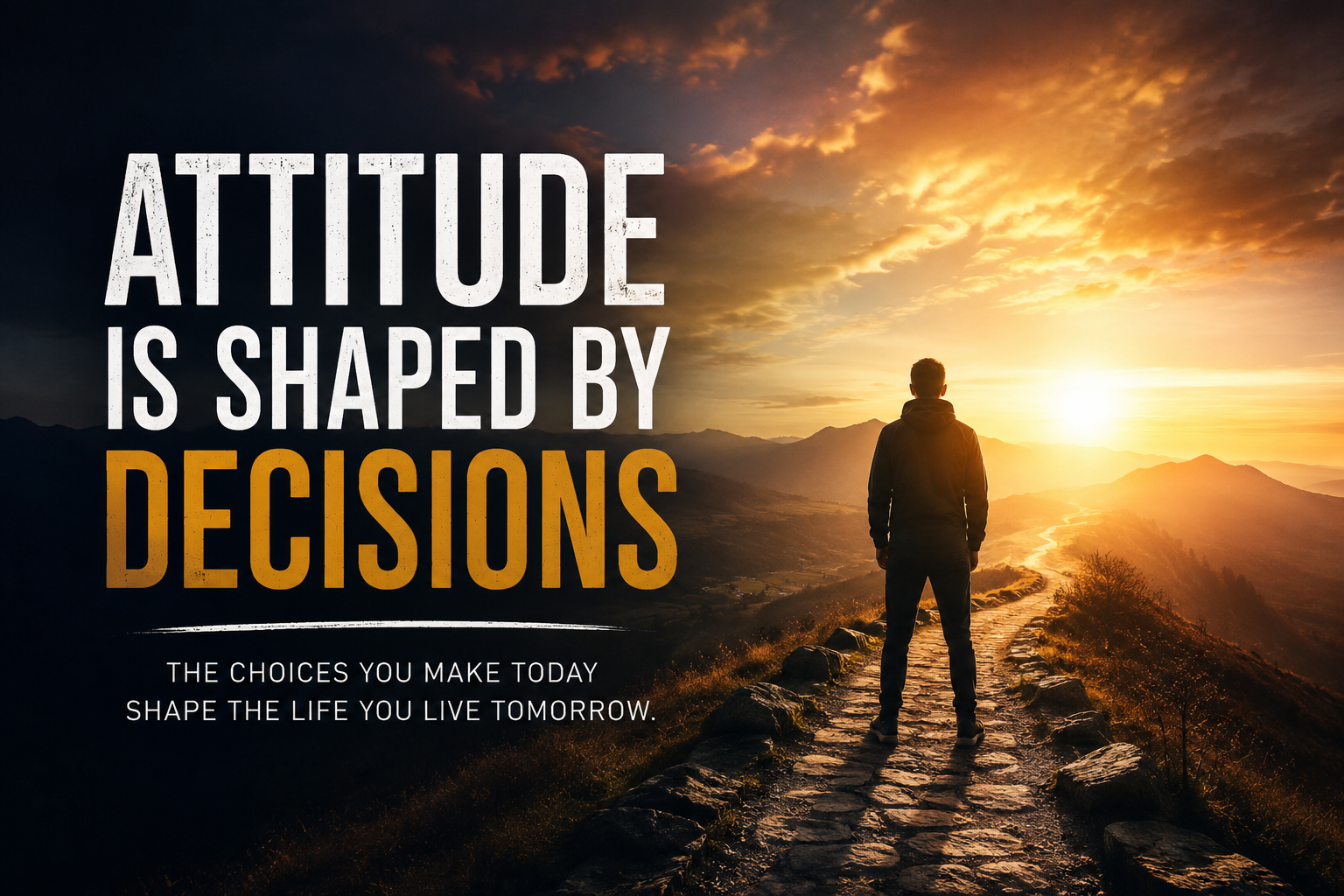
Your Attitude Is Shaped by the Decisions You Repeat
your-attitude-is-shaped-by-decisions Your attitude is not fixed. It is shaped by the thoughts, reactions, meanings, and…
-
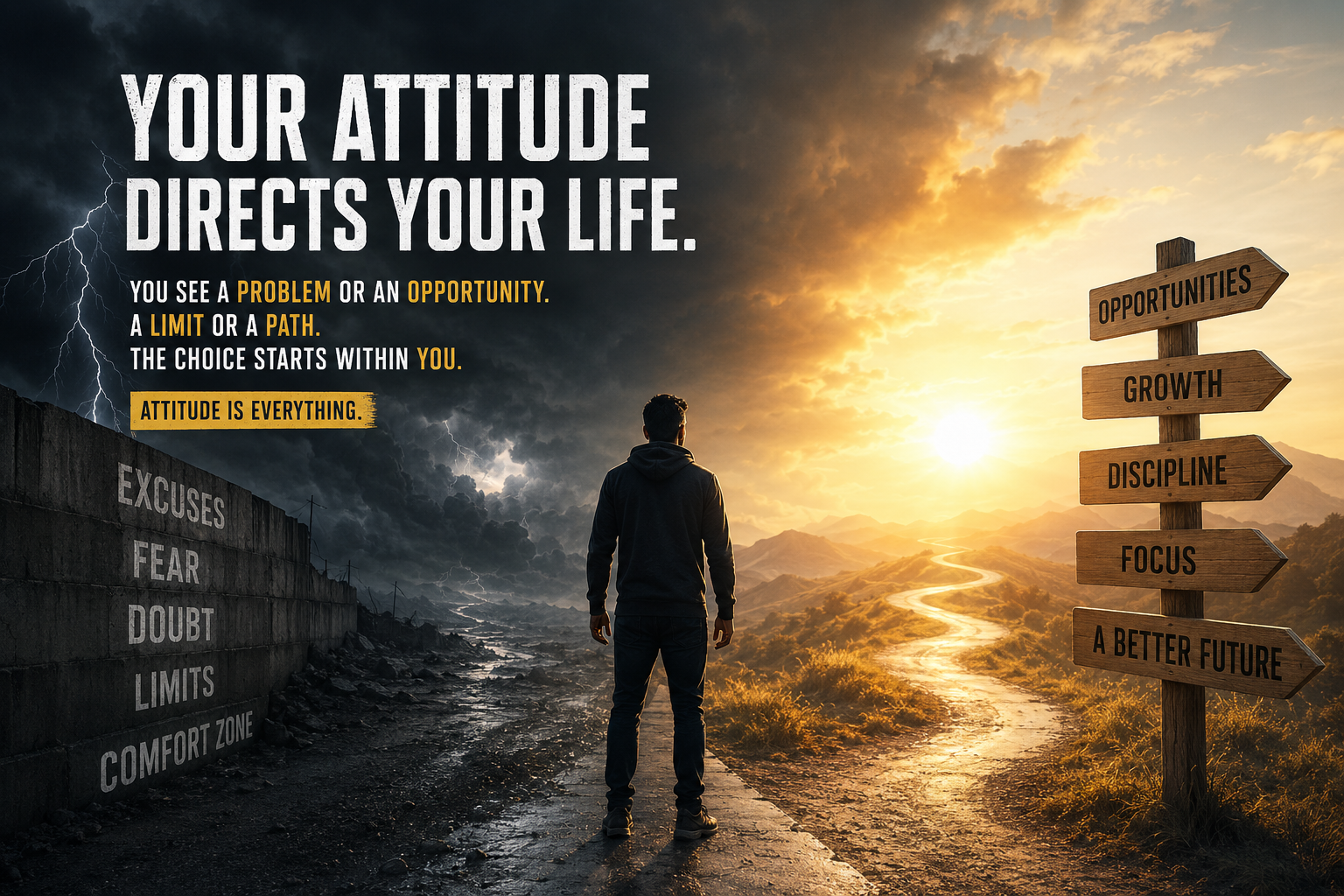
Why Attitude Directs Your Life
Blog Why Attitude Directs Your Life Your attitude is not just how you feel. It…

Leave a Reply