Blog
Why Attitude Directs Your Life
Your attitude is not just how you feel. It is the filter that decides what you see, what you believe is possible, and how you respond to life.
Most people think their life is shaped by their decisions.
And of course, decisions matter.
But before you make a decision, something deeper is already working in the background: your attitude.
Your attitude decides how you see a situation before you even fully think about it. It decides whether you see a problem or an opportunity. Whether you feel attacked or challenged. Whether you see a limit or a path. Whether your first thought is, “Why is this happening to me?” or “What can I do with this now?”
That is why attitude directs your life.
Not loudly.
Not always visibly.
Not always consciously.
But constantly.
Because your thoughts come from your attitude. Your decisions come from your thoughts. Your actions come from your decisions. And your life comes from your actions.
If the foundation is wrong, everything after it becomes harder.
Your Attitude Is the Filter
The problem is not always the situation.
Often, the problem is the way you see the situation.
Two people can face the same setback and react completely differently.
One person sees rejection and thinks, “This proves I am not good enough.”
Another person sees rejection and thinks, “This feedback can make me better.”
One person sees difficulty and thinks, “This is the end.”
Another person sees difficulty and thinks, “This is hard, but what is still possible?”
Same situation.
Different attitude.
Different direction.
That is not a small difference.
It is the difference between standing still and moving forward. Between excuses and responsibility. Between retreat and new action.
Your attitude does not only decide how you feel. It decides which path you even believe is possible.
The Situation Does Not Decide Everything
Life will bring problems. That is not the question.
The question is: What do you see inside the problem?
Some people experience a setback and immediately use it as proof that their goal is impossible.
They try something once. It does not work immediately. And then they say:
“See? I knew it. This doesn’t work.”
But maybe that is not true.
Maybe it does work. Just not like this.
Maybe the idea was not wrong. Maybe the execution was wrong. Maybe the goal was not wrong. Maybe the strategy was not clear enough. Maybe the path was not impossible. Maybe you simply stopped too early.
That is where attitude becomes decisive.
A weak attitude looks for confirmation that something cannot work.
A strong attitude looks for the next useful step.
This applies to business. To discipline. To relationships. To personal growth. To health. To leadership. To everything that requires change.
The situation does not automatically decide your path.
Your attitude decides which path you are even able to recognize inside that situation.
Your First Reaction Reveals Your Real Attitude
It is easy to say the right things when everything is calm.
It is easy to talk about discipline when you are motivated.
It is easy to talk about responsibility when life is going well.
It is easy to talk about strength when nothing is testing you.
But your real attitude shows in your first inner reaction.
When something goes wrong.
When someone criticizes you.
When you are tired.
When you are disappointed.
When you compare yourself to someone else.
When your plan does not work.
When you receive a rejection.
When life does not move the way you wanted.
That first reaction matters.
Because your first reaction is often not the truth.
It is your trained pattern.
If you have trained yourself to think negatively for years, your first thought will often be negative.
If you have trained yourself to look for excuses, your first impulse will often be an excuse.
If you have trained yourself to give away responsibility, your first reaction will often be to blame someone else.
If you have trained yourself to feel small, your first response to bigger possibilities may be rejection.
Not because those possibilities are impossible.
But because your attitude does not yet allow them.
And that is important.
Because what has been trained can also be changed.
You Do Not Need Positive Thinking. You Need Better Questions.
Changing your attitude does not mean lying to yourself.
It does not mean pretending that every situation is good.
It does not mean ignoring pain.
It does not mean forcing yourself to smile when something is wrong.
That is not strength. That is denial.
Real attitude change is different.
It means asking better questions when your old pattern wants to take over.
Instead of asking:
“Why is this happening to me?”
Ask:
“What can I do with this now?”
Instead of asking:
“Why is everything working against me?”
Ask:
“What is in my responsibility right now?”
Instead of asking:
“Why is this so hard?”
Ask:
“What is the next useful step?”
Instead of asking:
“Why do others have more luck?”
Ask:
“What can I learn?”
These questions do not magically change the situation.
But they change your direction.
And direction is decisive.
Many people do not lose because a situation is difficult. They lose because their attitude leads them in the wrong direction.
Into excuses.
Into bitterness.
Into envy.
Into self-pity.
Into stagnation.
Not because there is no other possibility.
But because inwardly, they do not see another possibility.
That is exactly what must change.
Attitude Changes in Small Moments
Most people wait for the big moment.
They think change happens after a huge breakthrough, a dramatic decision, or a powerful emotional experience.
But attitude usually changes somewhere much smaller.
It changes in everyday life.
When you would normally get annoyed, but you pause.
When you would normally make an excuse, but you ask yourself what part is your responsibility.
When you would normally think negatively, but you consciously look for one useful next step.
When you would normally give up, but you take one small action anyway.
That is training.
Not spectacular.
But powerful.
Because every moment in which you react differently than before weakens the old pattern and strengthens the new one.
That is how attitude changes.
Not through one big motivational moment.
But through many small conscious decisions.
Day by day.
Situation by situation.
Reaction by reaction.
A Simple Exercise: The 10-Second Check
Starting today, observe your first reaction.
Not the reaction you explain later.
Not the polished version you show on the outside.
Not the response you create after thinking about it for five minutes.
The first one.
When something happens, give yourself ten seconds and ask:
What was my first thought just now?
Was it negative?
Was it defensive?
Was it full of excuses?
Was it focused on blame?
Was it small?
Or was it calm?
Solution-oriented?
Clear?
Forward-looking?
That first reaction shows you where your attitude currently is.
Do this three to five times today.
Do not judge yourself. Just observe honestly.
Awareness is the beginning of change.
The Mirror Moment
Once a day, ask yourself one uncomfortable but powerful question:
Where did I give away responsibility today?
Not with shame.
Not with self-hate.
Not to attack yourself.
But honestly.
Maybe not everything was your fault. That is true.
But almost always, there is some part that belongs to you.
Your reaction.
Your preparation.
Your communication.
Your decision.
Your discipline.
Your next step.
And that is the part you look for.
Because that is where your power is.
The moment you find your responsibility, you find your influence again.
The Sentence That Brings You Back
There is one sentence that can bring you back when your old attitude takes over:
If my attitude does not change, nothing changes.
Use it when you notice yourself falling into old patterns.
When you are frustrated.
When you want to give up.
When you are looking for excuses.
When you feel sorry for yourself.
When you are blaming everything except your own next move.
Not as motivation.
As a reminder.
The problem is not only the situation. The problem may also be the way you are looking at it.
And you can change the way you look at it.
Your Life Follows Your Direction
Attitude is not something you understand once and then possess forever.
Attitude is something you live.
In thoughts.
In reactions.
In decisions.
In small moments that may seem unimportant from the outside but shape everything inside.
That is why attitude directs your life.
Not once.
Every day.
Not only in big decisions.
But in small repeated reactions.
In the end, one simple truth remains:
You will not change your life only by working harder.
You will change your life by looking at your life differently.
Because when you look differently, you think differently.
When you think differently, you decide differently.
When you decide differently, you act differently.
And when you act differently, a different life begins.
If your attitude does not change, nothing changes.
CTA
This article is based on the core message of my book ATTITUDE IS EVERYTHING.
If you want to go deeper into how your mindset shapes your discipline, direction, and future, this book was written for you.
Because real change does not start with perfect circumstances.
It starts with the attitude you bring into them.
This section provides an overview of the blog, showcasing a variety of articles, insights, and resources to inform and inspire readers.
-
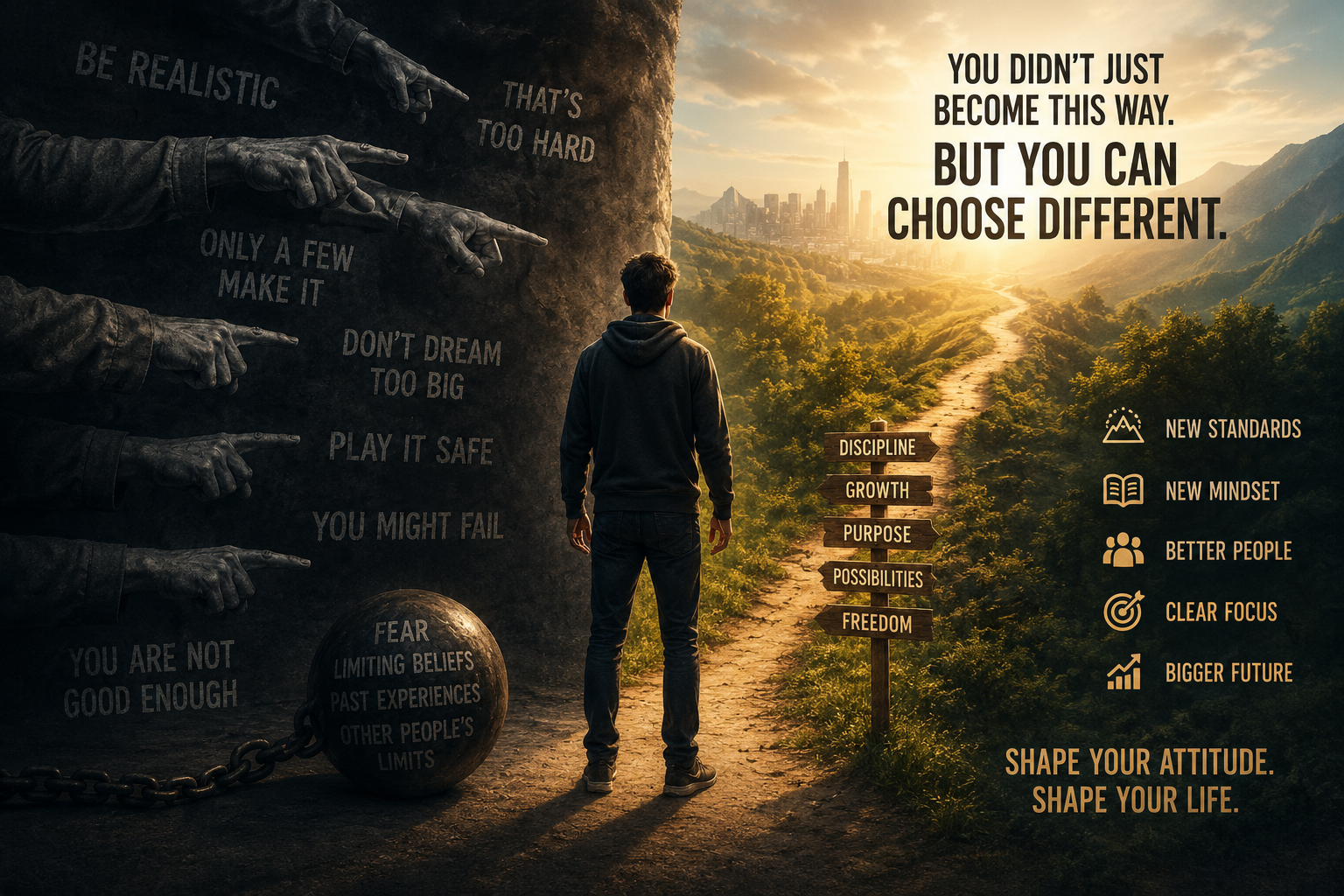
You Didn’t Just Become This Way — But You Don’t Have to Stay This Way
Blog Your attitude was shaped by people, experiences, environments, and repeated messages. But once you…
-

Your Attitude Is Shaped by the Decisions You Repeat
your-attitude-is-shaped-by-decisions Your attitude is not fixed. It is shaped by the thoughts, reactions, meanings, and…
-
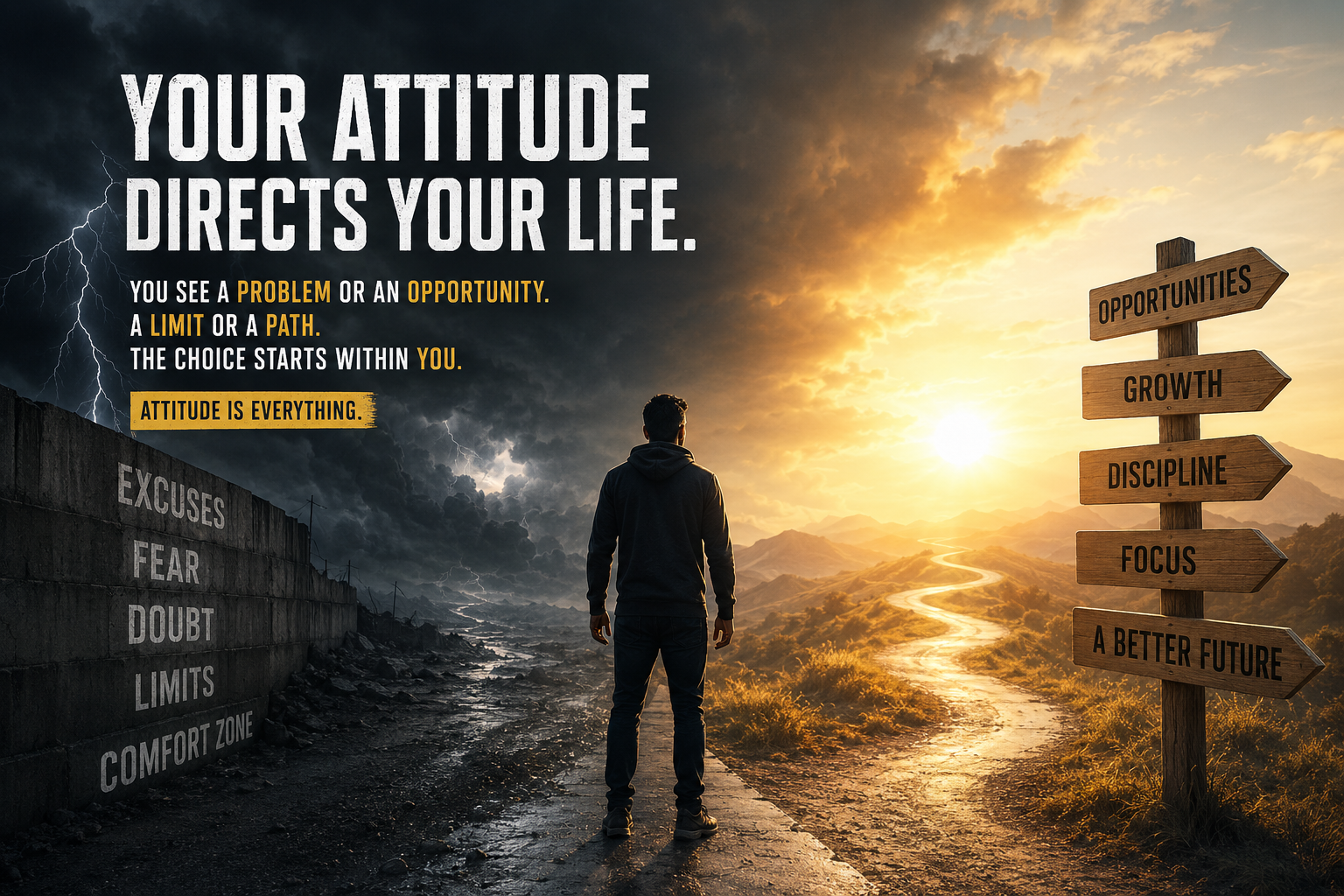
Why Attitude Directs Your Life
Blog Why Attitude Directs Your Life Your attitude is not just how you feel. It…

Leave a Reply